
How to vet a contractor before you hand over a deposit

The deposit is the moment everything changes, and almost nobody treats it that way.
Up until you send it, you hold every bit of leverage in the relationship. You have the money, there are other bidders, and the contractor is being pleasant because they want the job. Ten seconds after it lands, that flips. Now they have your money and you have a promise, and every conversation from that point runs on whether you picked the right person.
So here it is in one line.
Do your checking before the deposit, because afterward you're not evaluating a contractor anymore, you're managing one.
The good news is that the checking isn't hard and it isn't long. Most of what goes wrong on a residential job is visible beforehand if you look in three places: whether they are who they say they are, whether the bid describes the job you think you're buying, and how the money is scheduled to move. We've hired a lot of trades across Texas, and through our lending work we've also seen plenty of projects being run by somebody the owner met once. The pattern is consistent enough to write down.
Texas doesn't hand you a license to check, so check what does exist
This catches people out, especially anyone who has moved here from California or Florida. Texas does not license general contractors at the state level. There's no state exam and no statewide GC license number to look up for framing, drywall, roofing, or a general remodel.
Other things are verifiable, though, so you check those instead.
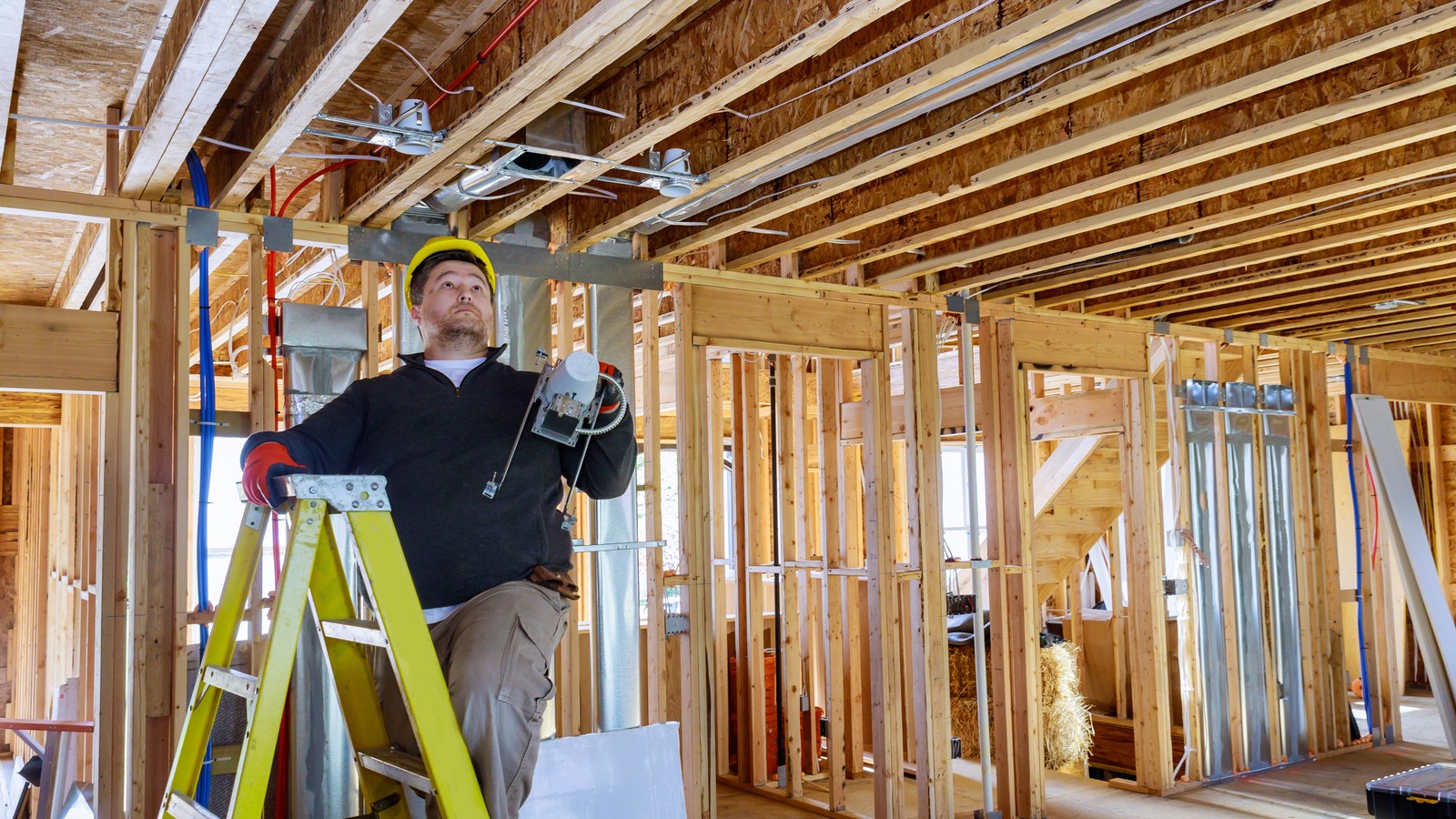
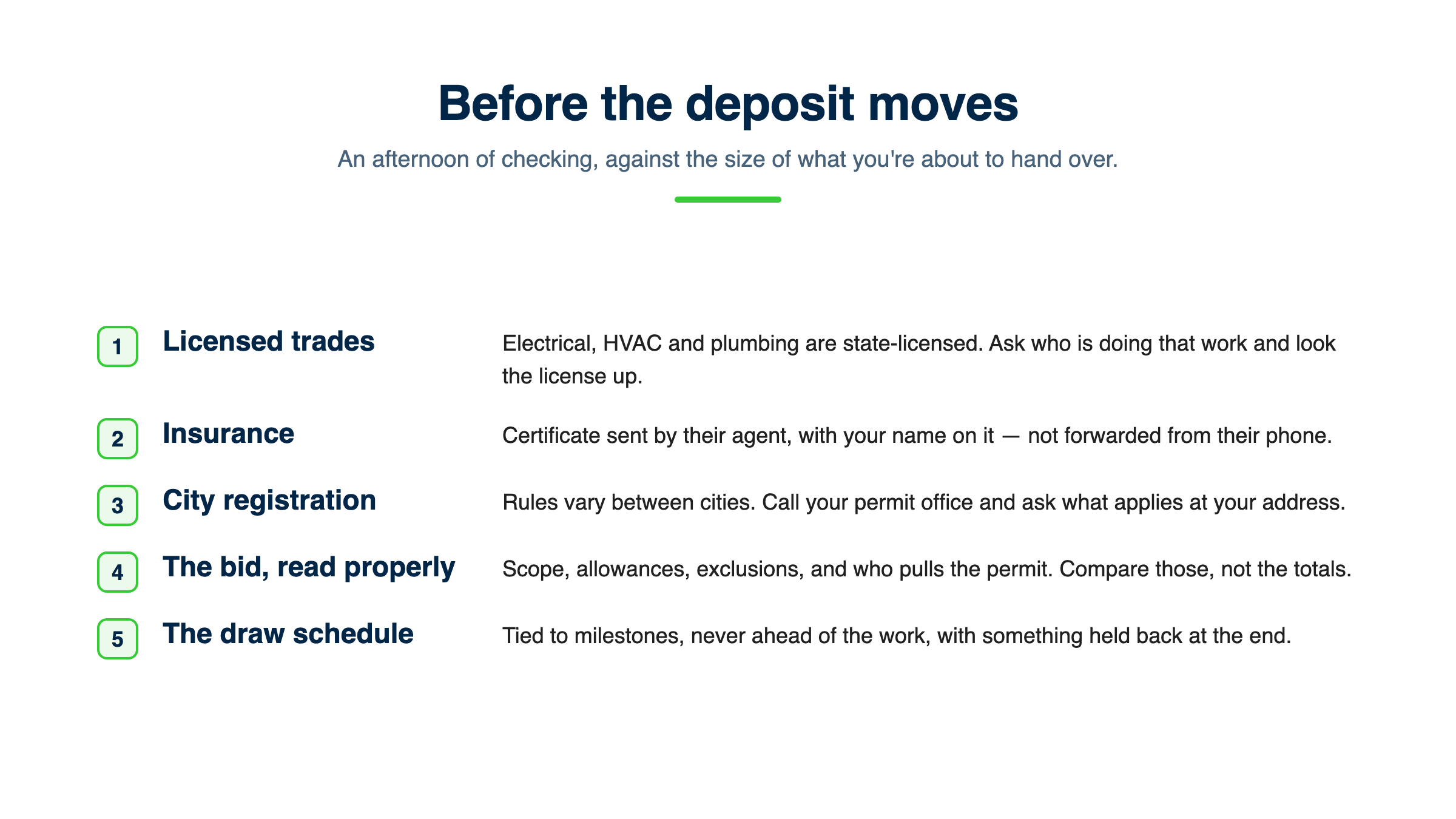
- The licensed trades inside the job. Several specialties are licensed by the state even though general contracting isn't. Electrical and air conditioning and refrigeration work are licensed through the Texas Department of Licensing and Regulation, and plumbing through the Texas State Board of Plumbing Examiners. A handful of others, including fire sprinkler and well drilling, are licensed too. Both agencies let you look a license up in about a minute. If your job includes any of that work, ask who specifically is performing it and check the name. "My guy handles it" is not an answer.
- City registration. Many Texas cities require contractors to register locally or to pull permits under their own name, and the rules vary a lot between them. Call your city's permit office and ask what applies at your address.
- Insurance, from the carrier rather than from them. Ask for a certificate of insurance sent directly by their agent, with your name on it. A PDF forwarded from the contractor's phone proves very little. You're looking for general liability at a limit that makes sense for the size of your job.
- A business you can find on paper. Either an entity on file with the state or an assumed-name filing at the county, plus a physical address that isn't a mailbox. Plenty of excellent one-truck operators are sole proprietors, so this is about being findable, not about being incorporated.
One Texas-specific thing worth knowing: most private employers here are not required to carry workers' compensation, so a contractor without it isn't necessarily cutting a corner. It still matters to you. If somebody is hurt on your property and there's no comp coverage behind them, the question of who is responsible gets complicated quickly. Ask whether they carry it, and if they don't, ask what does cover an injured worker on your job.
None of this guarantees good work. What it does is filter out the people who cannot survive being looked at, and that's a meaningful share of the ones who cause the worst problems.
Read the bid, not the number
Most people compare three bids by staring at the totals and picking the middle one. The total is the least informative part of the document.
What you want to know is whether the three bids describe the same job. Usually they don't, and the cheapest one is cheapest because it quietly leaves something out that you'll pay for later at a worse price.
Scope, in specifics. "Remodel bathroom, $18,000" is a wish rather than a scope. You want fixtures, surfaces, quantities, whether the subfloor is being touched, what happens to the existing tile. Vagueness in a bid turns into an argument once the walls are open.
Allowances. An allowance is a placeholder — say $3,000 for tile — trued up later against what you actually choose. They're normal, and they're also where a low bid hides. If the allowances are unrealistically small for the finishes you've described, the number isn't lower, it's deferred.
Exclusions. Good bids say plainly what isn't included: permits, dumpster, structural surprises, plumbing behind the wall. Silence is not the same as inclusion, and you don't want to find out which it was after demo day.
Who pulls the permit. If the answer is "you can pull it as the owner, it's faster," slow down. Pulling it yourself puts the responsibility for the work on you rather than on the person performing it. Worth knowing too: many Texas jurisdictions only allow an owner to pull permits on a home they actually live in, so if this is a rental, that option may not even be available to you. Either way it should be a deliberate decision, not a convenience mentioned in passing.
Make one reference call, and ask the uncomfortable question
References are close to worthless as normally used, because anybody can produce two happy customers. The useful version is a single question, asked plainly:
"Tell me about a job that went sideways, and what they did about it."
Ask the contractor first. Anybody with real volume has had a job go wrong — a supplier failed, a slab came in off, something behind a wall wasn't what anyone expected. A contractor who says nothing has ever gone wrong is either very new or not being straight with you, and neither is what you want to hear before writing a check.
Then ask a reference, and listen for how problems got communicated rather than whether problems happened. "They called me the same day and told me what it was going to cost" is what you're hoping for. "I kept calling and they'd say they were on the way" tells you exactly how month two is going to feel.
If you can, drive by an active job. Ten minutes at a live site tells you what no conversation will: whether the crew is actually there, whether the site is orderly, whether materials are being protected or left out in the weather.
How the money moves is the real protection
This is the part people negotiate least and should negotiate most, because the payment terms are where you keep some of the leverage you're otherwise handing over.
- Keep the deposit modest and purposeful. A deposit covering mobilization and materials is reasonable. A deposit covering a large share of the whole job before anything has happened is not a deposit, it's an unsecured loan you're making to somebody you just met.
- Tie draws to milestones, not to dates. "Payment on completion of rough-in and passed inspection" is checkable. "Payment on the 15th" pays for time whether or not the work moved.
- Stay behind the work, never ahead of it. At every point, the value of what's been completed should exceed what you've paid. Once you're ahead of that line, your remaining options get expensive fast.
- Hold something back until the punch list is closed. A meaningful final payment is what gets the last five percent of a job finished, which is reliably the hardest part to get done. Texas also has its own statutory rules about owner retainage that interact with lien deadlines, so how you structure this is a question for your attorney rather than a handshake.
- Ask about lien waivers as you pay. If a contractor takes your money and doesn't pay their subs or suppliers, those parties may have rights against your property even though you paid in full. Lien law here is technical and the deadlines are unforgiving. Treat it as a conversation with a Texas construction attorney, not something to work out from an article.
We'd say the same about the contract generally. A one-page agreement on a $60,000 job is exposure dressed up as thrift. Have somebody qualified read it before you sign, particularly on anything structural or anything a lender is involved in.
What this actually buys you
None of the above stops a job from going wrong. Materials still arrive late, cities still take longer than anyone plans for, and what's behind a wall is still a surprise. Anybody telling you a checklist prevents that is selling something.
What it buys you is a better class of problem. You'll be dealing with somebody insured, findable, whose bid described the real job, and who hasn't already been paid for work they haven't done. That's a difficult few weeks. The alternative — an uninsured stranger holding half your budget and not returning calls — is a difficult year, and we've watched people live through the second version far more often than they should have to.
The checking itself is mostly waiting on other people: a certificate from an agent, a callback from a permit office, twenty minutes reading three bids side by side, one honest conversation about the draw schedule. Set against the size of what you're about to hand somebody, it's very little to spend.
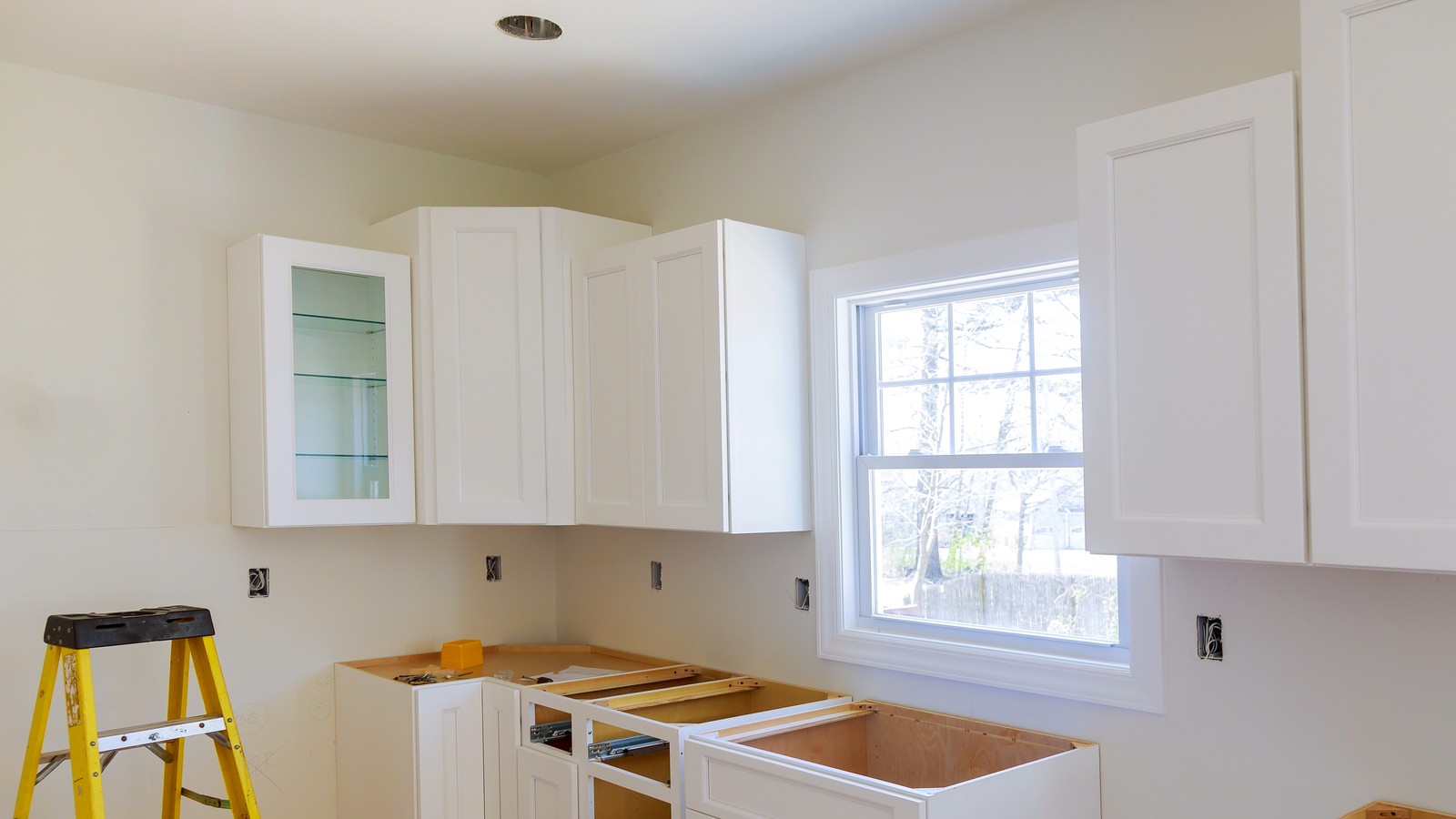
And if you're about to hire for something significant and you're not certain your bid comparison is telling you what you think it is, bring it to our monthly meetup. There's a good chance somebody in the room has hired for the same scope in the same market and will tell you what it actually cost them. Details are at vinandmichelle.com/meetup.
Ask the questions before the money moves. That's the cheapest they will ever be.